Pastor, think about your last elder meeting. How much of it was spent in prayer?
If the honest answer is “a couple of minutes at the top before we got to the real business,” you’re not alone. Most elder boards run like committees. There’s an agenda, reports, and more often than not, someone has a concern about the building. Usually somebody else has a question about the budget. You close in prayer, walk to your cars, and realize that the people charged with shepherding your church just spent ninety minutes talking about logistics and two minutes talking to God.
That’s not what elders were made for. And deep down, you know it.
Your elders care about prayer, but nobody has shown them what elder prayer looks like beyond a quick blessing before the business starts. And that somebody needs to be you.
Why Elder Prayer Matters More Than the Agenda
When Paul and Barnabas appointed elders in every church, they did it with prayer and fasting (Acts 14:23). The elders of the church weren’t installed to run budgets. They were set apart to shepherd God’s people under Christ, the Chief Shepherd (1 Peter 5:1-4). And shepherding, in Scripture, is always saturated in prayer from start to finish.
James makes this truth explicit. When someone in the congregation is suffering, who do they call? “Let him call for the elders of the church, and let them pray over him” (James 5:14).
Yet in most churches, elders spend their meetings managing the organization and leave much of the praying to the pastor. Over time, the board starts to look more like a corporate board of directors than a team of spiritual shepherds. When this happens, decisions get made based on spreadsheets and opinions instead of Scripture and dependence on the Holy Spirit.
The good news is that you can reverse this dynamic. But you need to be the catalyst that makes space for the Holy Spirit during your meetings.
Start with Fifteen Minutes, Not Fifteen Seconds
You don’t need to turn your next elder meeting into a prayer retreat. You just need to stop treating prayer as the opening act before the “real meeting” begins.
Here’s a simple shift for you to try at your next elders’ meeting. Give prayer the first fifteen minutes of every meeting. Open a passage of Scripture, read it aloud, and let it sit for a moment. Take a few moments and share with one another how that Scripture reveals the praiseworthy attributes of God. Then pray through what you just read and shared, together. When your elders see that the Bible and prayer come before the budget report, they’ll start to understand what deserves first priority.
One other practical approach is to work through a psalm or one of Paul’s prayers each meeting. For example, read Colossians 1:9-12 and then pray those words over your church by name. Read Psalm 23 together and let your elders respond to it out loud. This isn’t a sermon; you’re just setting the table for your board to meet with God before they meet about the agenda.
This may feel like a stretch at first. Some of your elders have never prayed out loud in a group. That’s okay. Keep it short and focused, and consistency matters more than length.
Pray for Each Other as People
When we do not begin with Scripture and worship, church board prayer sounds like a rehearsal of a vague prayer list of whatever comes to mind. “Lord, bless the fall festival. Help us find more volunteers for the children’s ministry. Be with the missions team.” Those prayers matter, but your elders also need to hear someone pray for them as people.
Instead, ask a simple question at the start of your prayer time: “How can we pray for you, not for your ministry area, but for you?” Then pray right there. Pray specifically and personally. Pray for their marriages, their health, their walk with God, and their kids.
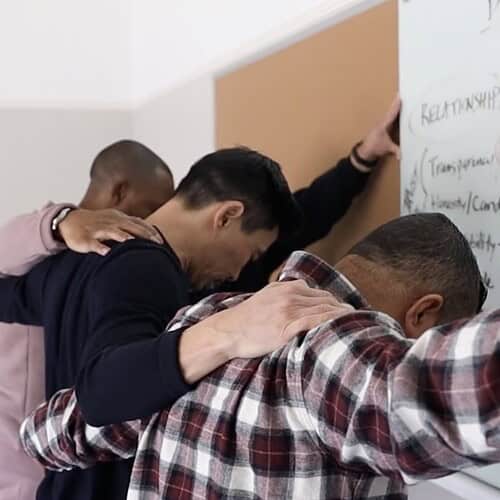
When pastors and elders start praying for each other by name, the culture within the elder team changes. The leaders who were ready to disagree about the building fund an hour ago are now standing shoulder to shoulder before God, and that changes how they treat each other for the rest of the meeting.
Jesus prayed for His disciples by name. He asked the Father to protect them, to sanctify them in truth, and to keep them united (John 17:11-17). If Jesus Christ thought His closest leaders needed that kind of personal intercession, your elders certainly do too.
Pray Before You Decide
There’s a simple pattern that will transform your elder meetings. Before the board votes on anything significant, stop and pray about it first.
This sounds obvious, but most boards short-circuit it or skip it altogether. Amid discussions, opinions, motions, and votes, prayer often gets crowded out. If it shows up at all, it comes after the fact, asking God to bless a decision the board already made instead of seeking Him first.
Try this instead. When a big decision lands on the table, say: “Before we discuss this further, let’s take five minutes and ask God for wisdom.” Then sit quietly. Let your elders pray. Read James 1:5 if you need a starting point: “If any of you lacks wisdom, let him ask God, who gives generously to all without reproach, and it will be given him.”
This practice does two things. It slows the room down and reminds everyone that the church belongs to God, not to the board. It also opens space for the Holy Spirit to lead, which is what sound doctrine and faithful leadership require.
Make It a Rhythm, Not a One-Time Fix
Now, to be clear, one powerful prayer time won’t transform your elder board, but regular rhythms will. Here are a few ways to build elder prayer into the fabric of your leadership team.
Pray through your membership directory during elder meetings. Contact members ahead of time to ask how the board can pray for them. Then spend fifteen to twenty minutes praying for those people by name. Over the course of a year, your elders will have prayed for every family in your church.
Start a group text or message thread where your elders share personal prayer requests between meetings. It keeps the connection alive outside the boardroom and turns a monthly obligation into a genuine brotherhood.
Consider a quarterly elder prayer retreat. Nothing fancy, just a few hours away from the church building with no agenda except seeking God together. Bring your Bibles, share a meal, and pray. These retreats will do more for your board’s unity than any team-building exercise.
The Fruit You’ll See
When praying elders become the norm, the results show up in places no strategic plan can touch. Decisions carry more weight because they were brought to God before they were brought to the table. Conflict gets resolved more quickly because leaders who pray together treat each other differently than leaders who only debate.
And the effect spreads. When your elders pray, your deacons notice. Your Sunday school teachers notice. Deacon prayer leadership grows when deacons see their elders modeling dependence on God. A praying elder board creates a praying church, because spiritual culture always flows from the epicenter of church leadership.
Your elders will start to see themselves as shepherds instead of merely board members. They’ll care about the congregation’s spiritual health and stop treating prayer as the leftover minutes. And you, pastor, will finally have what every shepherd needs: other leaders who are on their knees beside you, carrying the weight of ministry together.
“Shepherd the flock of God that is among you, exercising oversight, not under compulsion, but willingly, as God would have you” (1 Peter 5:2).
Pastor, you don’t have to carry this alone. The 6:4 Fellowship is a community of pastors pressing into prayer and the Word together. Join the Fellowship today. It’s free, and you’ll find leaders who understand the weight you carry.