Pastor, take a moment and think about your last staff meeting. How did it start?
If you’re like most church leaders, it probably began with a quick prayer, thirty seconds, maybe a minute, and then straight into the agenda. Budget updates. Event planning. Volunteer gaps. The calendar. The to-do list. And somewhere between the announcements and the action items, the most important thing gets crowded out.
Why Church Staff Prayer Matters
Your staff spends their days serving other people’s spiritual needs. But the often-neglected question is: who is watching over theirs?
The hard truth to embrace is that you can lead a productive ministry team and still have a spiritually dry one. Your worship leader can plan a powerful Sunday and go home empty. Your youth pastor can pour into teenagers all week and have no one pouring into them. Your admin can handle a hundred moving pieces and quietly wonder if anyone sees the weight they’re carrying.
The spiritual health of your church staff doesn’t happen by accident. It starts with you leading your team to the one place where real strength comes from: God’s presence, together, in prayer.
Why a 30-Second Staff Prayer Isn’t Enough
Let’s be direct. A rushed blessing before the meeting agenda is not staff devotion. And it’s certainly not a staff prayer meeting. It’s a formality, and your team knows the difference.
When prayer is just the opening act before the “real work” begins, you’re training your team to believe that prayer is secondary. That the agenda is what matters. That God gets the first thirty seconds, and the spreadsheet gets the next sixty minutes.
But Scripture paints a very different picture. When the early church’s leaders faced growing demands on their time, they didn’t add more tasks. They subtracted them. “It is not right that we should give up preaching the word of God to serve tables… We will devote ourselves to prayer and to the ministry of the word” (Acts 6:2, 4).
The apostles understood something we often keep forgetting. Prayer is not preparation for the work. Prayer is the work. And if it’s the work for the whole church, it’s especially the work for the people who lead it.
Your Church Staff Needs a Shepherd Too
You shepherd your congregation every week. But your staff needs shepherding too, and not just the professional kind. They need you to care about their spiritual life, not only their job performance.
Jesus Himself modeled this. He didn’t just give His disciples assignments. He prayed with them. He pulled away with them. He shared meals, asked hard questions, and taught them how to depend on the Father. Teh gospels are chalked full of examples of how “He would withdraw to desolate places and pray” (Luke 5:16), and He brought His closest team with Him.
When you lead your staff in genuine, unhurried prayer, you’re telling them something that no performance review ever could: “Your soul matters to me. Not just your output.”
That kind of leadership changes a team. It builds trust that no team-building exercise can replicate. It surfaces struggles that would never come up in a status meeting. And it reminds everyone in the room, including you, that apart from God, you can do nothing (John 15:5).
How to Lead Church Staff in Prayer: 5 Practical Steps
You don’t need to turn every staff meeting into a prayer retreat. But you do need to give prayer more than the leftover minutes. Here’s a practical framework you can start using this week:
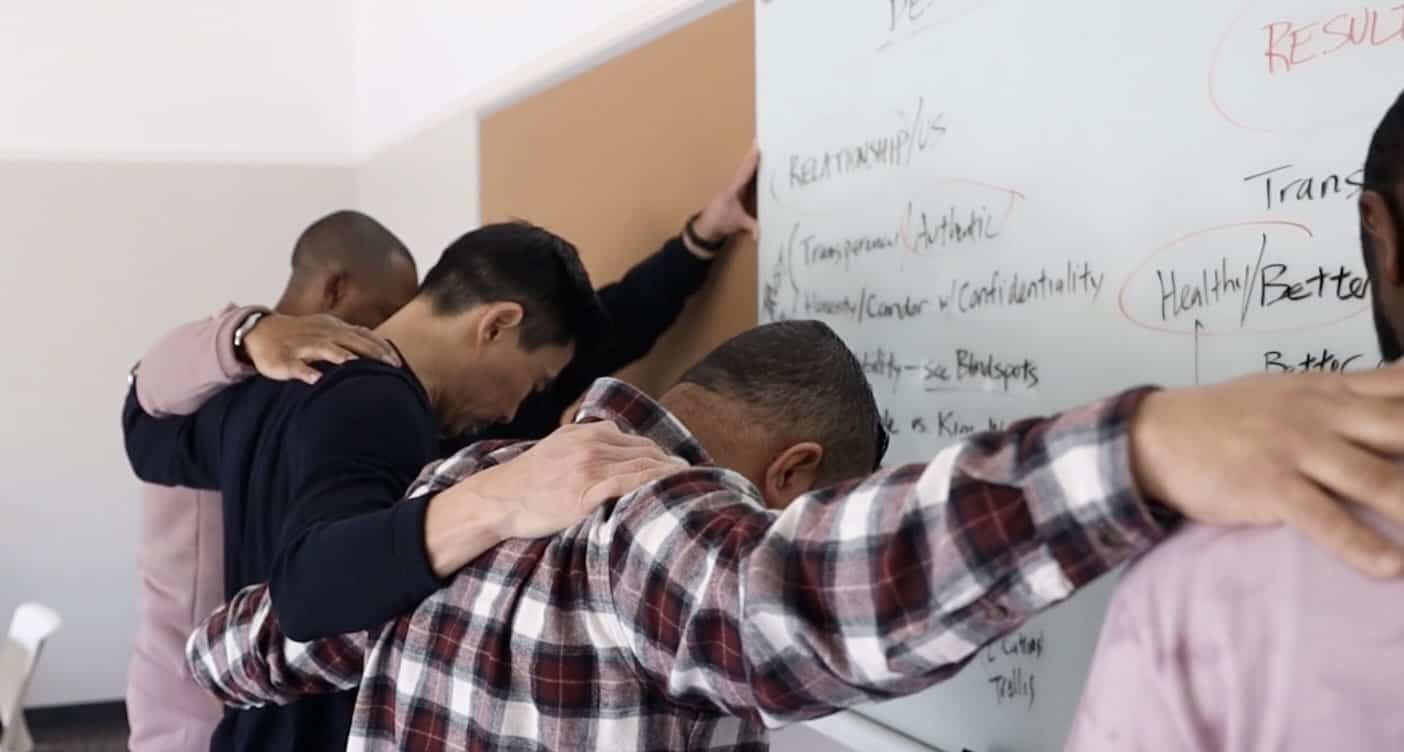
#1. Give prayer the first fifteen minutes, not the first fifteen seconds. Put it at the top of the agenda, and protect the time. Open a psalm or a short passage of Scripture. Read it aloud. Let it sit. Then pray through what you just read, together. When your team sees that the Bible and prayer come before the budget report, they’ll understand where your priorities are. (You can see several examples of this prayer paradigm HERE)
#2. Pray for each other, not just for the church. Most staff prayers are about the ministry, the upcoming event, the sermon series, the building project. Those prayers matter. But your team also needs to hear someone pray for them as people. For their marriages. Their kids. Their faith. Their rest. Take time to ask, “How can we pray for you, not for your ministry area, but for you?” Then pray right there.
#3. Create space for honesty. Ministry staff often feel like they have to perform spiritually. They lead Bible studies. They plan worship services. They counsel others. But behind the competence, many of them are running on fumes. When you, as the lead pastor, are willing to say, “I’m struggling in my prayer life this week” or “I need God to give me patience I don’t have right now,” you give your team permission to be real too. That kind of honesty doesn’t weaken your leadership. It strengthens the whole room.
#4. Pray Scripture over your team. One of the most powerful things you can do is pray God’s Word directly over the people you lead. Paul did this constantly. He prayed that the Colossians would “walk in a manner worthy of the Lord, fully pleasing to him, bearing fruit in every good work and growing in the knowledge of God” (Colossians 1:10). He prayed that the Ephesians would know the love of Christ that goes beyond knowledge (Ephesians 3:19). Pick a passage each week and pray it over your staff by name. Watch what God does.
#5. Make it a rhythm, not an event. One powerful prayer time won’t change your team’s spiritual health. But weekly rhythms will. Monday morning prayer. A brief daily devotion before the office opens. A quarterly staff prayer retreat where you step away from the building and spend a full day seeking God together. The point is consistency. What gets repeated gets rooted.
The Fruit You’ll See In Your Staff
When a pastor leads church staff prayer with real intention, not as a box to check, but as the foundation for everything else, the results show up in ways no strategic plan can produce.
Staff meetings become more Spirit-led and less stress-driven. Conflict gets resolved faster because people have been praying side by side. Decisions carry more confidence because they were brought to God before they were brought to the table. And your team’s spiritual health stops being an afterthought and becomes the very thing that fuels their ministry.
“Therefore, confess your sins to one another and pray for one another, that you may be healed. The prayer of a righteous person has great power as it is working” (James 5:16).
Your staff doesn’t need a better workflow system. They need a pastor who leads them to the Father. They need someone who says, “Before we get to the agenda, let’s go before God.”
That someone is you.
Pastor, you don’t have to carry this alone. The 6:4 Fellowship is a community of pastors pressing into prayer and the Word together. Join the Fellowship today. It’s free, and you’ll find leaders who understand the weight you carry.
Not a member? SIGN UP and become part of
The 6:4 Fellowship today!
This article answers the following questions. Below are shortened versions of the answers.
How should a pastor lead church staff in prayer?
A pastor should give prayer real time and priority, not treat it as a quick opening formality. Lead the team into Scripture-fed prayer, pray for one another personally, and model honesty and dependence on God.
What should a church staff prayer meeting look like?
A church staff prayer meeting should include Scripture, unhurried prayer, personal prayer for team members, and space for honest sharing. The goal is to seek God together before moving into ministry tasks and decisions.
How long should staff prayer be?
The article recommends giving prayer the first fifteen minutes of a staff meeting rather than the first fifteen seconds. The point is to protect meaningful time for Scripture and prayer instead of squeezing it into leftover minutes.
How do you pray Scripture with church staff?
Choose a Psalm or short passage, read it aloud, and then pray directly from what the text says about God, His will, and His promises. You can also pray specific passages over staff members by name, as Paul did for believers in his letters.
Why should church staff pray together?
Praying together helps a ministry team depend on God rather than merely on plans, skills, or productivity. It can deepen trust, strengthen spiritual health, and remind the team that ministry flows from abiding in Christ.
How can pastors care for the spiritual health of their staff?
Pastors can care for staff by shepherding their souls, not only managing their performance. That means praying for them personally, creating room for honesty, praying Scripture over them, and building consistent rhythms of prayer into the life of the team.