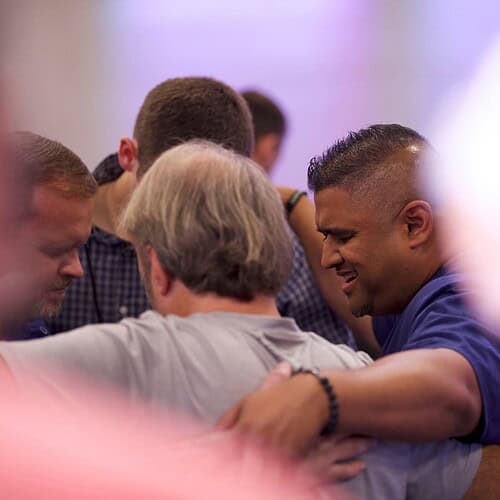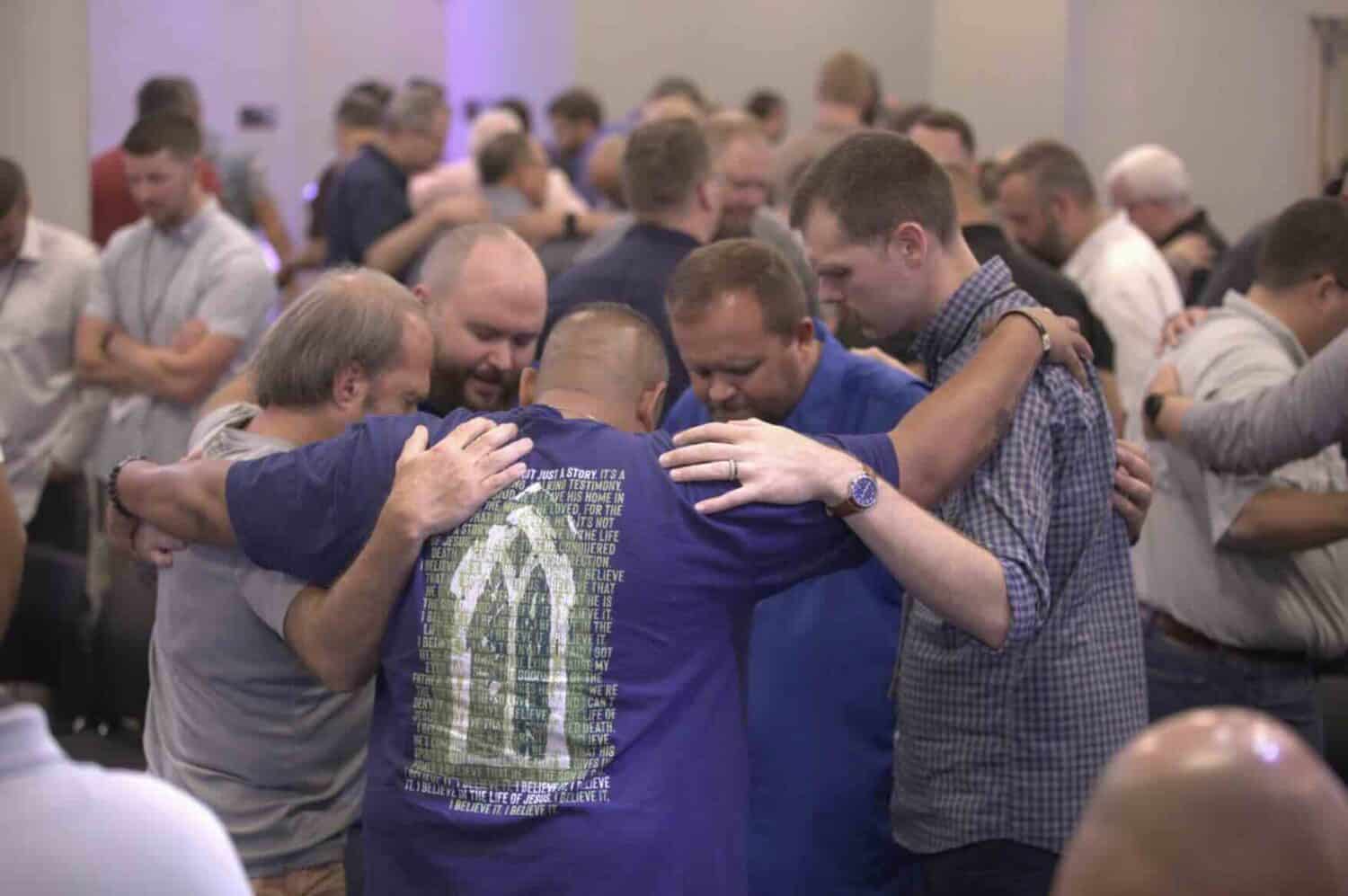
How do pastors build a prayer culture in the church?
It rarely begins with a new program or another event on the calendar. It begins when a pastor becomes honest about his own need for God. For Travis Whitaker, that moment came during his first 30-day sabbatical.

Pastor, you can lead a growing church, preach faithful sermons, care for people, plan wisely, and still sense that something has gone quiet in your soul.
That is hard to admit.
The people around you may see strength; your staff may see direction; your church may see a faithful shepherd who keeps showing up, but beneath the activity:
Prayer can become hurried
Familiar words can lose their life
Time with God can begin to feel like one more responsibility in a week already filled with them.
Any of these sound familiar? Travis Whitaker knows that feeling.

Travis and his wife planted Mile City Church in Detroit ten years ago. Like many church planters, he learned to carry many roles at once. He prayed, preached, led, planned, cared for people, and worked to help the church move forward.
Then, during his first 30-day sabbatical, God showed him something he had not fully seen before.
There was a distance in his relationship with God.
Travis had not stopped praying. Prayer was still part of his regular life. Yet his prayers had become rushed, busy, and, in his own words, “a little bored.” He sensed a barrier he could not explain.
Perhaps you recognize that experience.
You still pray before meetings. You pray for the sick. You pray over sermons. You pray with people after the service. You may even teach your church about prayer. But somewhere along the way, prayer can become connected mainly to the work of ministry rather than communion with God.
We ask God to help us preach, lead, solve, build, and respond. Those prayers are right and needed, yet the Lord calls us to more than asking Him to support our plans. He calls us to know Him, enjoy Him, listen to Him, and let His Word shape the deepest desires of our hearts.
Sometimes it takes slowing down to notice how long we have been running.
Your Prayer Life Shapes Your Church
What Travis saw during his sabbatical was not only about his personal prayer life. He began to understand that his own relationship with prayer was shaping the prayer life of his church.
That realization carried weight.
He looked back on prayer opportunities when few people attended or came forward. He recognized how his concern for guests—particularly those who might feel unsure or uncomfortable around public expressions of prayer—had sometimes led him to control the environment.
His desire was pastoral. He wanted to remove barriers for people who were far from God, yet, over time, that desire may have created a different barrier. In trying to protect people from discomfort, he wondered whether he had held back the very culture of prayer the church needed.
“I realized that I was potentially killing or stifling the prayer culture at our church,” he said.
That sentence is not easy for a pastor to say.
It would be easier to point toward the congregation: People are too busy. They do not come to prayer meetings. They do not seem hungry. They expect the staff to do the spiritual work for them.
But Travis looked at himself.
Not with shame; not with self-condemnation… With humility.
He began asking, “God, what do I do with this?”
That is a faithful prayer for any pastor.
It does not defend the past or pretend that everything is fine. It brings the truth into the presence of God and waits for His direction.
“Search me, O God, and know my heart! Try me and know my thoughts!” (Psalm 139:23).
The Lord does not expose our weakness to cast us aside. He brings it into the light so He can lead us into freedom and deeper dependence.
Pastor, You Do Not Have to Learn Alone
In God’s kindness, Travis was connected with The Praying Leader Coaching cohort created, by The 6:4 Fellowship to help pastors grow in prayer.
The idea sounds simple: pastors learning how to pray, but many pastors have never received that kind of help.
We may have studied the doctrine of prayer. We may know how to explain prayer, preach about prayer, and lead prayer from a platform. But few of us have sat with trusted brothers who can help us slow down, pray through Scripture, listen to God, and lead from a life of dependence.
In the cohort, Travis learned to use the Lord’s Prayer as a framework for praying through the rest of Scripture. The Bible was no longer separate from his conversation with God. The Word became the substance of that conversation. God spoke through Scripture, and Travis responded in prayer.
His prayers became Scripture-fed and Spirit-led.
This is one of the kindest ways God renews a tired prayer life.
When we do not know what to say, God has already given us words.
We can reverence Him for what a passage reveals about His character, respond to what that section of His Word shows us about our hearts –confessing sin & releasing bitterness, make requests about our needs, our people, and our churches under His rule, and pray for readiness and strength against temptation that is usually mentioned, or at least insinuated, right in the passage as well.
Prayer does not depend on our ability to produce the right emotion or find impressive language. We come to the Father through the Son, with the help of the Holy Spirit, and let the Word of God lead us.
That changes prayer from a task we complete into a relationship we enter.
Why Prayer Cannot Be Delegated
After returning from sabbatical, Travis took his staff on their annual retreat.
Mile City Church was approaching its tenth anniversary. He asked the team to name the things people would most likely associate with their church. They filled a whiteboard with good answers. There were many qualities a pastor would be grateful to see in a church. Yet Travis knew something would not appear on the board.
People would not describe them as a prayer-filled church.
That moment brought the issue into focus.
A church can be known for biblical preaching, warm community, service, creativity, outreach, or care for families. We should thank God for every sign of grace.
But what would it mean for our churches to be known as houses of prayer?
Not because prayer appears in the mission statement or because a weekly prayer gathering exists on the calendar, but because seeking God has become part of the church’s shared life.
Travis knew he could not assign that work to someone else. He could not ask a staff member to create a prayer program while he continued leading in the same way.
The change had to begin with him.
It would move from his own heart to his family, then to his elders and staff, and then into the life of the church.
It would be slow.
It would need to be real.
It would need to be modeled before it could be multiplied.
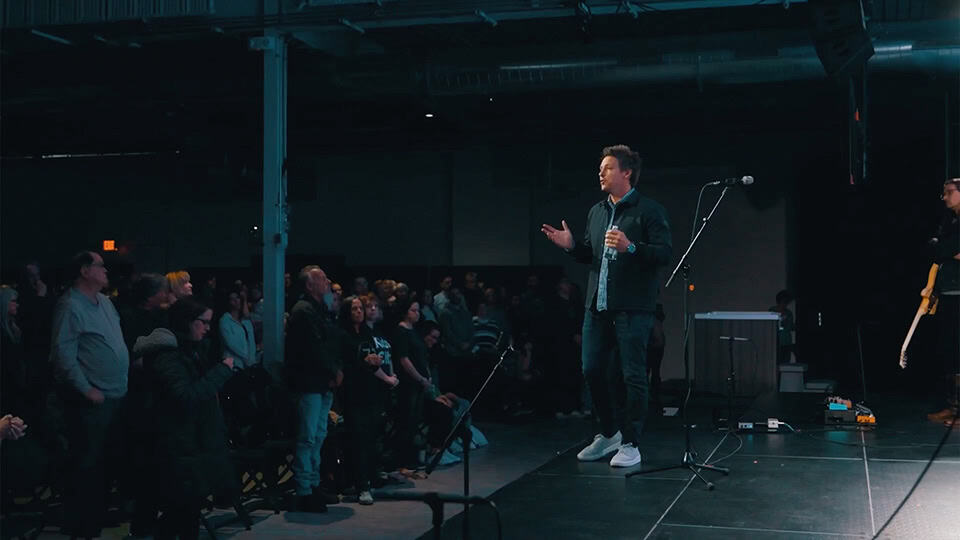
This is where many pastors feel the tension. We do not want prayer to become another church program. Yet without thought, intention, and leadership, prayer is often pushed aside by louder demands.
Travis now tells pastors and church planters that they need a strategy for prayer.
Church leaders create strategies for communication, outreach, preaching, discipleship, and growth. Creativity and planning can serve the mission of God. But pastors should not assume that prayer will simply happen because everyone agrees it matters.
“If I could start over,” Travis said, “I would’ve made that the priority.”
A strategy for prayer does not mean trying to manage the Holy Spirit. It means making room to seek God and placing prayer near the center of the church’s leadership rather than near the edge of its schedule.
It means asking honest questions:
- Do our leaders pray together beyond opening and closing meetings?
- Does Scripture guide our prayers?
- Do people hear their pastors pray with humility, faith, confession, and dependence?
- Are we teaching people how to pray, or only telling them that they should?
- Have our calendars shown that prayer is part of the real work of ministry?
Systems cannot create spiritual life. Only God can do that.
But wise rhythms can help us return, again and again, to the One who gives life.
How to Begin Building a Prayer Culture
Start with humility
Travis has seen change in his own heart, his family, his elders, his staff, and the wider church.
The change did not begin with a large event. It began when a pastor admitted that something was missing. That may be where renewal begins for you.
You may feel insecure about joining a group where pastors pray honestly together. You may wonder what others will think if you admit that your prayer life needs help.
Travis’s counsel is direct: humble yourself and step into a place where you can learn alongside pastors who share the same desire.
Pastor, needing help with prayer does not disqualify you.
It places you among the disciples.
They watched Jesus pray, and then they asked, “Lord, teach us to pray” (Luke 11:1).
They did not hide what they lacked. They brought it to Jesus.
We can do the same.
You do not need to pretend that prayer is thriving when it has become thin. You do not need to carry the burden alone. You do not need to create a polished plan before taking one faithful step.
Begin by telling God the truth.
Open His Word.
Ask Him to teach you to pray again.
Then find brothers who will walk with you—not to judge your weakness, but to help you return to prayer and the ministry of the Word.
This week, set aside one unhurried hour. Pray slowly through the Lord’s Prayer, using each line to guide your response to God. Ask Him to renew prayer in you before you ask Him to renew prayer in your church.
Resources to help you on your prayer journey:
Books
- Praying the Psalms Volume 1 sampler (included in your 6:4 membership)
- Praying the Psalms Collection – A prayer guide for each Psalm
- NEW! Praying the Gospels – Pray this pattern through narrative Scripture
- Transforming Prayer – chronicling Daniel Henderson’s prayer journey that began this ministry.
Community
- Regional Monthly Prayer Call – Pastors in Your area practicing this together
- The Praying Leader Coaching Cohort – learn and learn to lead worship-based prayer
- Transforming Prayer Coaching – a cohort for individuals to learn and practice worship-based prayer
Common questions this article addresses (with simple answers):
What is a prayer culture in a church?
A prayer culture exists when seeking God is part of the church’s shared life, not merely an event on its calendar. Prayer shapes the way leaders make decisions, care for people, respond to Scripture, and pursue God’s mission.
How can a pastor build a prayer culture in the church?
A pastor begins by renewing his or her own prayer life, modeling prayer before delegating it, praying regularly with church leaders, and helping the congregation respond to God through Scripture.
Why should churches have a prayer strategy?
A prayer strategy gives prayer an intentional place in the life and leadership of the church. It does not control the work of the Holy Spirit. It creates regular space for leaders and congregations to depend on God together.
How can pastors renew their prayer lives?
Pastors can begin by setting aside unhurried time, praying through Scripture, using the Lord’s Prayer as a guide, and joining trusted pastors who will pray and grow with them.
What does Scripture-fed, Spirit-led prayer mean?
Scripture-fed prayer begins with what God has said in His Word. Spirit-led prayer depends on the Holy Spirit to help us understand, respond, confess, worship, and pray according to God’s will.