When the Church Starts Praying Together
There are few things more encouraging to a pastor than watching people move from attending church to participating in the life of the church. Pastor Cody Davis recently got to see a glimpse of that—and prayer was at the center of it.
Cody has pastored Pillar Church of Woodlawn for the past three and a half years, stepping into a revitalization effort with a congregation that had been in decline. Early in 2026, he participated in Praying Leader Coaching, and since then he has devoted himself to helping Pillar become a church where prayer is woven more deeply into congregational life.
One place that has begun to happen is something Pillar calls its “Fifth Sunday Slowdown.” Whenever a month has five Sundays, the church gathers a little differently. Entire families worship together, and Cody has begun using these services to help his people practice Scripture-fed, Spirit-led, worship-based prayer.

For pastors who want to know how to build a culture of prayer in the church, Cody Davis’ story offers a simple encouragement: teach your people to pray, give them room to practice, and keep at it.
On the fifth Sunday of August, Cody gave a brief message on the opening words of the Lord’s Prayer: “Our Father.”
Jesus begins His instruction on prayer by reminding us of the relationship we enjoy with God. We come to Him as our Heavenly Father. Prayer is not merely a religious obligation or a way to bring God our list of needs. Through Christ, we are welcomed into relationship with the Father and invited to speak with Him.
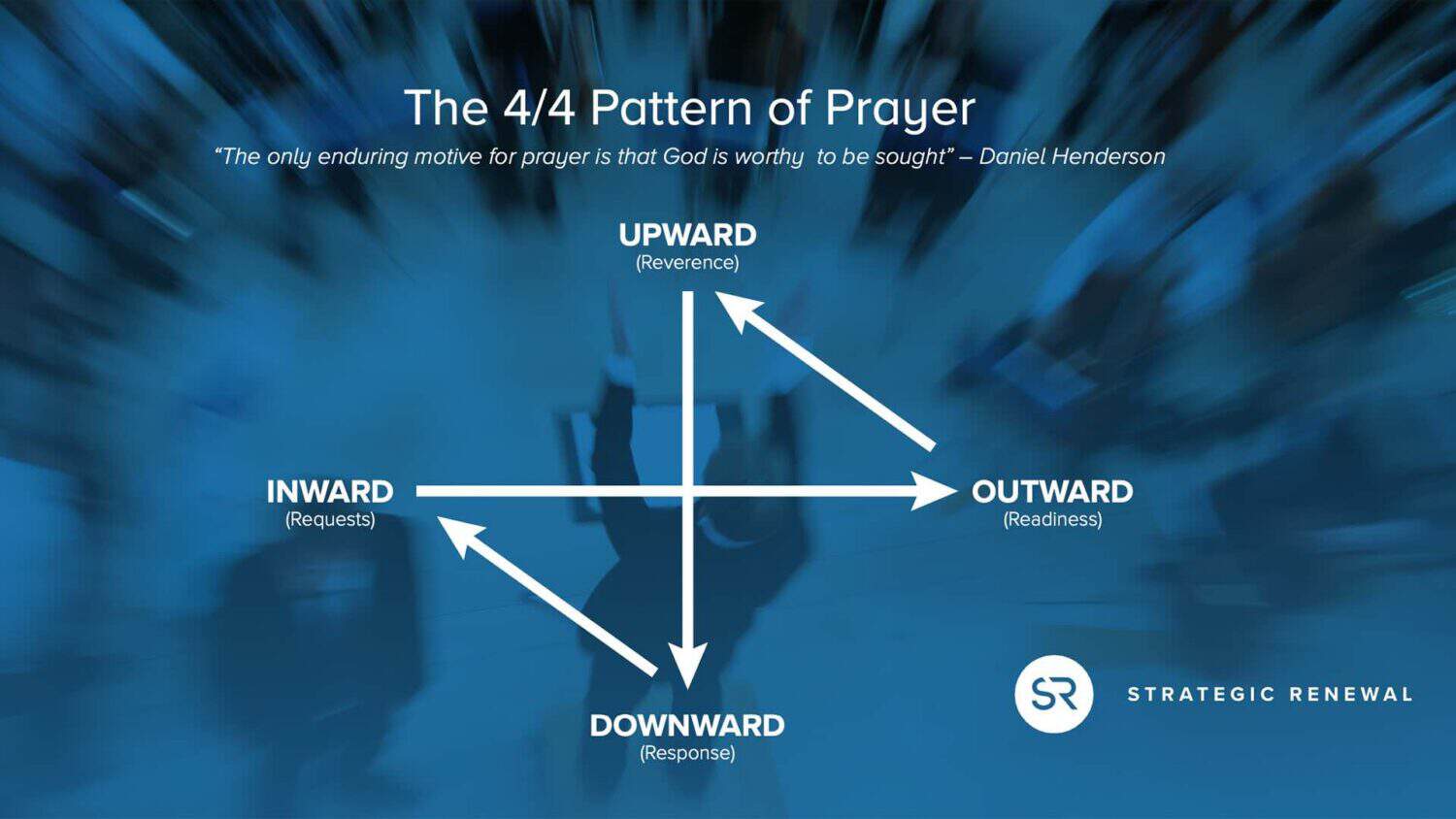
After teaching for about ten minutes, Cody walked the congregation through a series of prayer prompts using the 4/4 pattern. Together they turned their attention toward God, responded to His Word, brought their requests to Him, and prepared to walk in obedience.
It was the third time Pillar had devoted a Fifth Sunday service to this kind of congregational prayer. This time Cody noticed something: people were really engaging.
That matters because corporate prayer does not always come naturally to our congregations. Many Christians are accustomed to attending a service where someone else preaches, someone else leads the music, and someone else prays. When we begin inviting people to participate—to respond to Scripture, pray aloud, pray with one another, or sit quietly before God—it can feel unfamiliar.
What happened after the service helped Cody see what God was doing.
A couple who had only been attending Pillar for a few weeks approached him. They told him:
“We’ve spent the last 13 years going to church and having church done for us. Now we realize that we need to show up and ‘do church’ together!”
Then they admitted something else. The corporate prayer that morning had been uncomfortable for them.
But they wanted to keep trying.
What a beautiful picture of discipleship.
They had not suddenly become experts in prayer. They simply discovered that gathering with God’s people could be more than watching what happens from the pew. They were being invited to participate in the shared spiritual life of the body of Christ—and they wanted more.
Pastor, there is encouragement here for us.
We may need to teach our people to pray
We often assume our people know how to pray because they have been in church for years. But knowing that prayer matters and learning to pray—personally and with other believers—are not the same thing.
The disciples themselves said to Jesus, “Lord, teach us to pray” (Luke 11:1). Jesus responded by teaching them. He gave them words and a pattern that directed their attention toward the Father, His kingdom, their daily dependence, their need for forgiveness, and their need for God’s protection.
Our people may need the same kind of patient leadership.
Some may never have experienced extended prayer in a Sunday gathering. Some may feel awkward praying with another person. Some may not know what to say without falling back on familiar phrases. Others may have spent years in churches where prayer was something primarily done by the pastor from the platform.
That doesn’t mean they are resistant to prayer. They may simply need someone to show them how.
Cody’s experience is a good reminder that building a praying church usually doesn’t happen through one sermon or one special prayer event. Pillar had done this three times. Cody kept teaching, kept creating space, and kept inviting people to participate. Over time, people began responding.
How to Build a Praying Church
The couple’s comment gets at something bigger than one Sunday at Pillar Church: “We need to show up and ‘do church’ together.”
The New Testament picture of the church is deeply participatory. We worship together, serve one another, bear one another’s burdens, exercise our gifts, hear the Word together—and pray together.
Acts 2:42 tells us that the early believers “devoted themselves to the apostles’ teaching and the fellowship, to the breaking of bread and the prayers.” Prayer wasn’t simply something the leaders practiced on behalf of everyone else. It was part of the shared life of God’s people.
That kind of church culture rarely develops by accident. Pastors help shape it by what we teach, model, prioritize, and make room for.
And sometimes making room is one of the most important things we can do.
We don’t need to manufacture an emotional experience. We don’t need to pressure people into praying aloud before they are ready. We can open the Scriptures, turn people’s attention toward God, give them simple biblical prompts, and create space for them to respond.
Then we can do it again.
And again.
Over time, what once felt strange can become part of the normal rhythm of life together.
Keep going, pastor
For those of us who believe in the priority of prayer, Cody’s story offers a simple encouragement: keep helping your people pray.
You may not see an immediate response. The silence may feel awkward. Participation may be uneven. You may wonder whether people are connecting with what you are trying to do.
Give it time.
Our calling in Acts 6:4 is to devote ourselves “to prayer and to the ministry of the word.” As prayer and the Word increasingly shape us as pastors, we can patiently invite our people into that same life of dependence upon God.
Maybe renewal in your congregation won’t begin with another program. Maybe it begins with opening the Bible, reminding your people who their Father is, and giving them time to talk with Him.
That’s what Cody did.
And somewhere along the way, two people who had spent 13 years having church “done for them” began discovering the joy—and the discomfort—of becoming active participants in a praying church.
They want to keep trying.
May God give all of us congregations filled with people willing to say the same.